
- European Regional Development Fund (ERDF)
- 2 Jan 2017 to 31 Dec 2020
- Poland
Project page and source record Share by email Share on LinkedIn
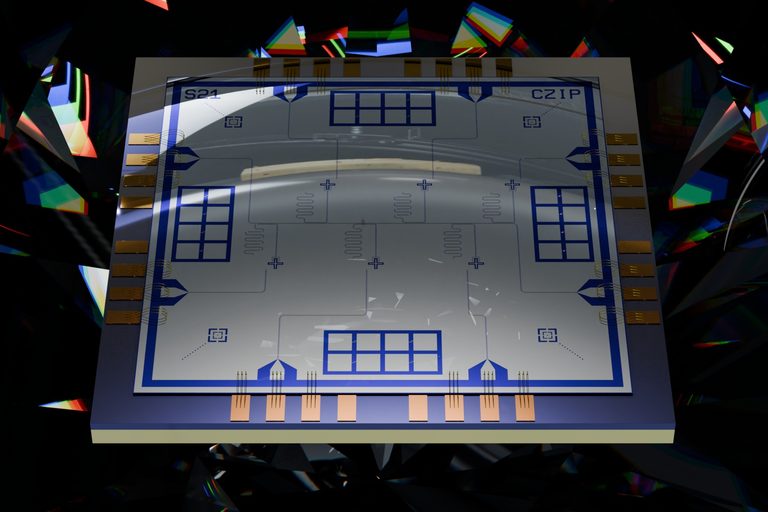
Operation co-funded by EU cohesion policy (European Regional Development Fund (ERDF)) under the programme Smart growth - PL - ERDF (2014PL16RFOP001), managing authority: Ministerstwo obsługujące ministra właściwego ds. rozwoju regionalnego. The source names no beneficiary for this operation. Location: Kraków (NUTS PL213); Poland. Budget: total eligible expenditure EUR 2,434,619.42; EU co-financing EUR 7,618,953.21 (co-financing rate 73.6%), as stated by the source. Runs 2017-01-02 to 2020-12-31. Source: Kohesio, EU cohesion policy projects managed by national and regional authorities (not CORDIS). Summary from Kohesio (English machine translation by the source): Reference number of the aid programme: SA.41471(2015/X) Purpose of public aid: Article 25 of EC Regulation No 651/2014 of 17 June 2014 declaring certain types of aid compatible with the internal market in the application of Articles 107 and 108 of the Treaty (OJ L. I'm sorry. EU L 187/1 of 26.06.2014). The aim of the project is to conduct industrial research to simulate and develop an algorithm that uses quantum phenomena to solve difficult cases of NP-complete problems (e.g. finding the Hamilton cycle), and then development work aimed at implementing the developed algorithm in selected, practically available architectures of quantum computers. At present, dynamic computerisation of every aspect of individual and social life requires ever-increasing computing power – including large computing centres for processing and exchanging information. Increasing memory and processor efficiency meets a significant proportion of growing needs. Current methods of gaining computing power will cease to work around 2023 (Moora law) when quantum effects cannot be avoided. However, there is a class of problems of great practical importance, e.g. in planning global telecommunication networks, optimising the production of integrated circuits, logistics, pattern search, etc., where solving difficult cases requires computational resources growing exponentially with increasing input size, for which quantum computers can provide sufficient computing power.
Source: Kohesio (EU cohesion policy projects), European Commission, Directorate-General for Regional and Urban Policy (DG REGIO). Retrieved 2026-10-21. Licence: CC0 1.0 (Cohesion Open Data Platform, dataset 2014-2020 Kohesio projects). Selected metadata, adapted presentation; the publisher's record is authoritative. No endorsement by the source is implied. Licence: public domain dedication (CC0 1.0).
AI-assisted summary: The project focuses on developing an algorithm for solving NP-complete problems using quantum computers, co-funded by the EU with a budget of EUR 2,434,619.42 and EU co-financing of EUR 7,618,953.21, running from January 2017 to December 2020 in Kraków, Poland. Suggested technology pillar: computing. Generated by AI from the public source text; it may contain errors and the original source is authoritative.
Source: kohesio.ec.europa.eu · checked 21 Oct 2026 · AI-assisted summary