
- Carlsberg Foundation
- 26 Aug 2024
Project page and source record Share by email Share on LinkedIn
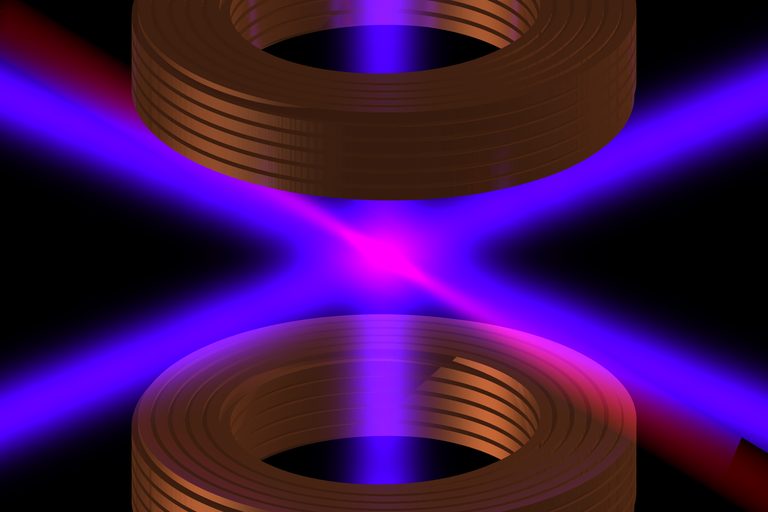
Project funded by Carlsberg Foundation (Internationalisation Fellowships), grant CF21-0410. Participating organisations named by the source: Max Planck Institute of Quantum Optics, Garching bei München, Germany. Runs n/a to 2024-08-26. Source: OpenAIRE Graph, from the funder's project data (collected by OpenAIRE on 2025-08-01); national funding data, not CORDIS. Abstract given by the source: What? My project seeks to develop new theoretical tools and methods to describe doped quantum magnets. These systems are formed by removing a few particles from a magnetically ordered lattice. The resulting vacant sites - or holes - effectively move around the lattice, disturbing the magnetic environment, and leading to a highly correlated motion. State-of-the-art experiments allow us to physically model such complex systems by trapping atoms in so-called optical lattices. This makes it possible to study these systems in great detail - atom by atom. Importantly, the physics of doped quantum magnets is known to be intimately linked with high-temperature superconductivity. These fascinating materials suddenly let electric current travel without loss below a certain critical temperature. Why? Superconductors are already used for MRI diagnostics, the particle accelerators at CERN, and the high-speed Maglev trains. However, most superconductors need to be cooled to about -270ºC by liquid helium, which is becoming increasingly scarce and expensive. High-temperature superconductors can potentially circumvent these obstacles. However, their fundamental properties remain a mystery, preventing us from developing more resilient and flexible materials. At the same time, doped quantum magnets is also an important example of strongly interacting quantum many-body systems out of equilibrium. In particular, the presence of holes in the lattice leads to the formation of quasi-particles called magnetic polarons that could well provide the effective charges carrying the super-current. How? The research will be conducted at the Max Planck Institute Of Quantum Optics (MPQ) in Garching bei München, Germany. They are one of the world-leading institutions in quantum science, performing groundbreaking experiments with optical lattices and continuing to redefine the state of the art of cold-atom quantum simulations. At the same time, their Theory Division has pioneered many of the core [shortened; the full text is on the OpenAIRE page]
Source: OpenAIRE Graph: projects of national funders, OpenAIRE, from the project data of Carlsberg Foundation. Retrieved 2026-11-02. Licence: Creative Commons Attribution 4.0 (OpenAIRE Graph). Selected metadata, adapted presentation; the publisher's record is authoritative. No endorsement by the source is implied. Licence: Creative Commons Attribution 4.0 (CC BY 4.0).
AI-assisted summary: The project "Dynamics of Doped Quantum Magnets" is funded by the Carlsberg Foundation and involves the Max Planck Institute of Quantum Optics in Germany. It aims to develop theoretical tools to study doped quantum magnets and their relation to high-temperature superconductivity. Suggested technology pillar: enabling. Generated by AI from the public source text; it may contain errors and the original source is authoritative.
Source: explore.openaire.eu · checked 2 Nov 2026 · AI-assisted summary