
- Ministry of Science, Education and Youth of the Republic of Croatia
- 6 Nov 2019 to 5 Nov 2023
Project page and source record Share by email Share on LinkedIn
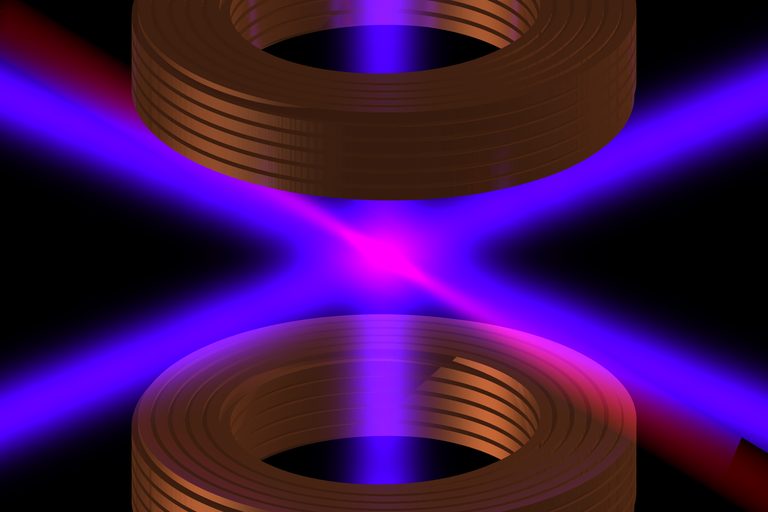
Project funded by Ministry of Science, Education and Youth of the Republic of Croatia, grant Ugovor br. 2/2019. Participating organisations named by the source: Prirodoslovno-matematički fakultet u Splitu. Funded amount: HRK 320,000, as stated by the source. Runs 2019-11-06 to 2023-11-05. Source: OpenAIRE Graph, from the funder's project data (collected by OpenAIRE on 2025-08-01); national funding data, not CORDIS. Abstract given by the source: The proposed work is in the scientific area of quantum information, with a focus on enabling exciting science to be performed on quantum computers that are available now, or in the short term. The main focus is in two different areas. The first is on exploring the relationship between a system and its environment within a controlled quantum simulation. The Penning trap forms an ideal platform for such a study. The relationship between entanglement of a system with the environment, symmetries that protect the entanglement, and methods that can harvest the entanglement back to the system will be explored for applications in creating highly entangled states and using them for ultrasensitive measurements. The second area is on developing algorithms to measure the response of a quantum system to some external perturbation, be it an electric or magnetic field, or something else. The strategy is to employ many-body theory to determine the most important quantity to measure on the quantum computer which allows for the most accurate determination of the response of the system to the perturbing field. Throughout the work, the intellectual merit and the broader impacts are tightly coupled together. The proposed work will develop new methodologies within a field called reservoir engineering to create highly entangled states and to manipulate the entanglement by transferring it to different parts of the system. Symmetries will be invoked to protect the fragile entanglement and the dissipation from the reservoir will also be employed to help stabilize the construction of these states. In addition, we will develop new algorithms that will determine the most accurate ways to employ quantum computers to determine how complex quantum systems respond to external perturbations. These algorithms will require careful formal developments to determine how best to measure the desired observables. In addition, we will be studying a problem called Kramers escape, which determines how [shortened; the full text is on the OpenAIRE page]
Source: OpenAIRE Graph: projects of national funders, OpenAIRE, from the project data of Ministry of Science, Education and Youth of the Republic of Croatia. Retrieved 2026-10-22. Licence: Creative Commons Attribution 4.0 (OpenAIRE Graph). Selected metadata, adapted presentation; the publisher's record is authoritative. No endorsement by the source is implied. Licence: Creative Commons Attribution 4.0 (CC BY 4.0).
AI-assisted summary: The project "Engineering reservoirs and optimizing response function measurements in quantum simulators and computers" is funded by the Croatian Ministry of Science, Education and Youth with HRK 320,000 from 2019-11-06 to 2023-11-05, focusing on quantum information and simulations. Suggested technology pillar: simulation. Generated by AI from the public source text; it may contain errors and the original source is authoritative.
Source: explore.openaire.eu · checked 22 Oct 2026 · AI-assisted summary