
- European Regional Development Fund (ERDF)
- 1 Jan 2018 to 31 Dec 2019
- Spain
Project page and source record Share by email Share on LinkedIn
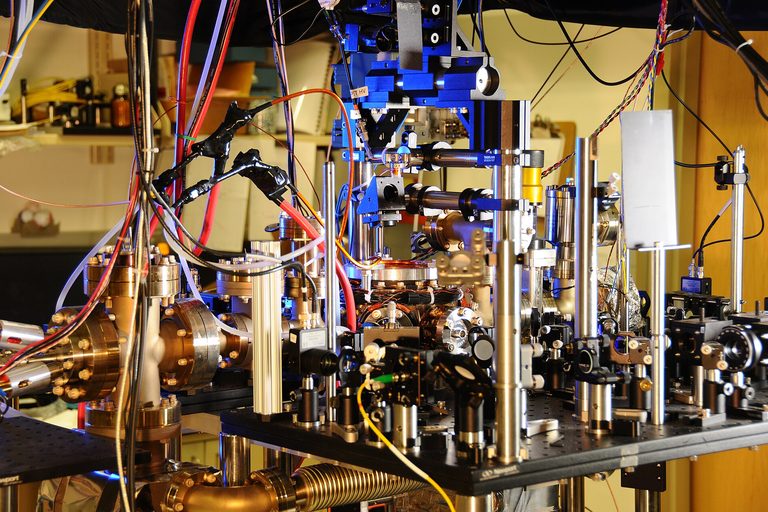
Operation co-funded by EU cohesion policy (European Regional Development Fund (ERDF)) under the programme Multi-regional Spain - ERDF (2014ES16RFOP002), managing authority: Subdirección General de Gestión del FEDER, de la Dirección General de Fondos Europeos del Ministerio de Hacienda.. The source names no beneficiary for this operation. Location: Gipuzkoa (NUTS ES212); Spain. Budget: total eligible expenditure EUR 261,852.83; EU co-financing EUR 130,926.414, as stated by the source. Runs 2018-01-01 to 2019-12-31. Source: Kohesio, EU cohesion policy projects managed by national and regional authorities (not CORDIS). Summary from Kohesio (English machine translation by the source): The system that we propose in this application is a singular system in the research environment of the Basque Country. There is no other such platform, not only in the Material Physics Center, but in the Basque Country as a whole. This platform is an optical tweezer with the capabilities of trapping, levitating, manipulating and controlling the forces on small particles. These particles can then be used to characterize biomolecules and to study quantum phenomena which will allow us to develop new kinds of sensors. The platform will be operated by the newly created Quantum Nanophotonics group, led by Prof. Gabriel Molina-Terriza. This group has ample and demonstrated experience in the implementation and operation of this kind of systems. This kind of platforms is very versatile and will allow to service a variety of groups with different interests: from those purely interested in characterizing optical forces, to the control and characterization of nanoparticles, from the more applied research in biomolecules to the fundamentals of quantum interactions of light and matter. Optical tweezers and levitated system are becoming mainstream not only in academic environments, but also in technological industries dedicated to biomedicine and the development of new sensors. In particular, Prof. Gabriel Molina-Terriza is collaborating with the American company Lockheed Martin, Inc. to push the development of these new technologies.
Source: Kohesio (EU cohesion policy projects), European Commission, Directorate-General for Regional and Urban Policy (DG REGIO). Retrieved 2026-10-21. Licence: CC0 1.0 (Cohesion Open Data Platform, dataset 2014-2020 Kohesio projects). Selected metadata, adapted presentation; the publisher's record is authoritative. No endorsement by the source is implied. Licence: public domain dedication (CC0 1.0).
AI-assisted summary: The project involves an optical clamping platform for studying quantum sensors in biology, co-funded by the EU with a budget of EUR 261,852.83. It operates in Gipuzkoa, Spain, from January 1, 2018, to December 31, 2019. Suggested technology pillar: sensing. Generated by AI from the public source text; it may contain errors and the original source is authoritative.
Source: kohesio.ec.europa.eu · checked 21 Oct 2026 · AI-assisted summary