
- Swedish Research Council
- 1 Jan 2025 to 31 Dec 2028
Project page and source record Share by email Share on LinkedIn
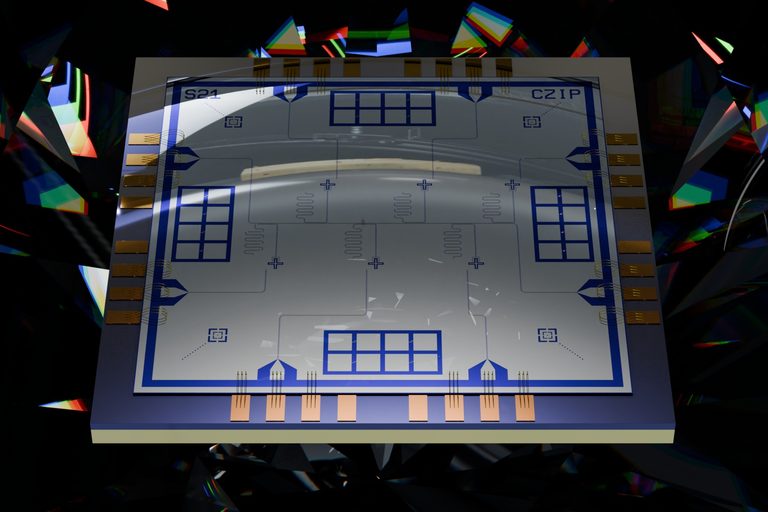
Project funded by Swedish Research Council (Project grant), grant 2024-04826_VR. Participating organisations named by the source: Chalmers University of Technology. Funded amount: SEK 4,222,000, as stated by the source. Runs 2025-01-01 to 2028-12-31. Keywords: Oklassificerat, Unclassified. Source: OpenAIRE Graph, from the funder's project data (collected by OpenAIRE on 2025-12-05); national funding data, not CORDIS. Abstract given by the source: Quantum entanglement is the key resource of quantum mechanics; its use is going to open a way to powerful computing and advanced sensing. Yet, an uncontrolled entanglement with parasitic degrees of freedom in the environment kills the quantum advantage, causing decoherence of quantum state. We focus on engineered superconducting solid-state quantum systems. They are made by nanofabrication, which typically leaves some non-crystalline fabrication debris; the tunnel junction itself is made of amorphous alumina. Therefore, the sources of decoherence in superconducting circuits are intimately related to the physics of amorphous materials, hosting a plethora of two-level fluctuators and stray spins; both providing 1/f noise, detrimental for the qubit. Interaction of decohering environment with quantum devices is temperature dependent. Recently, we cooled down the superconducting device to submillikelvin temperatures by immersing it in a quantum liquid 3He, observing the first-ever thermalization of decohering bath down to 1 mK and the reduction of 1/f noise in the superconducting resonator. Thus, we confirmed a strong interaction of quantum liquid with the decohering bath. Here we aim at extending the experiment with resonator towards pulsed measurements of superconducting qubits, scrutinizing and optimizing the silencing effect of quantum liquid in the qubit decohering environment, aiming at eliminating its detrimental effect on a qubit, regardless of microscopic defects nature.
Source: OpenAIRE Graph: projects of national funders, OpenAIRE, from the project data of Swedish Research Council. Retrieved 2026-10-28. Licence: Creative Commons Attribution 4.0 (OpenAIRE Graph). Selected metadata, adapted presentation; the publisher's record is authoritative. No endorsement by the source is implied. Licence: Creative Commons Attribution 4.0 (CC BY 4.0).
AI-assisted summary: The project "Quenching decoherence sources of solid-state quantum systems by interaction with quantum liquids" is funded by the Swedish Research Council with a grant of SEK 4,222,000, running from January 1, 2025, to December 31, 2028, involving Chalmers University of Technology. Suggested technology pillar: computing. Generated by AI from the public source text; it may contain errors and the original source is authoritative.
Source: explore.openaire.eu · checked 28 Oct 2026 · AI-assisted summary