
- European Regional Development Fund (ERDF)
- 3 Jun 2019 to 31 Dec 2022
- Netherlands, Belgium
Project page and source record Share by email Share on LinkedIn
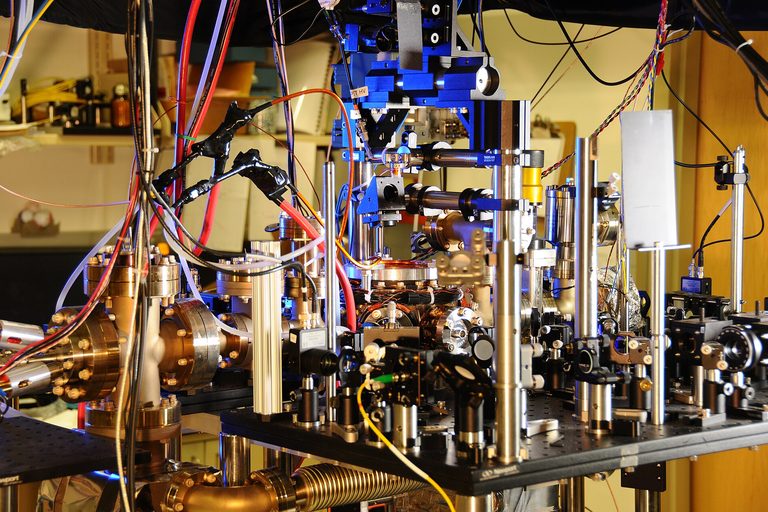
Operation co-funded by EU cohesion policy (European Regional Development Fund (ERDF)) under the programme Interreg V-A - Belgium-The Netherlands (2014TC16RFCB046), managing authority: Provincie Antwerpen - Autonoom Provinciebedrijf Provinciaal Secretariaat Europese Structuurfondsen. The source names no beneficiary for this operation. Location: Arrondissement of Leuven (NUTS BE242); Arrondissement of Ghent (NUTS BE234); Arrondissement of Antwerp (NUTS BE211); Groot-Amsterdam (NUTS NL329); Zuidoost-Noord-Brabant (NUTS NL414); Netherlands; Belgium. Budget: total eligible expenditure EUR 13,893,107; EU co-financing EUR 3,832,916.06 (co-financing rate 27.59%), as stated by the source. Runs 2019-06-03 to 2022-12-31. Source: Kohesio, EU cohesion policy projects managed by national and regional authorities (not CORDIS); selected because its summary names quantum technology. Summary from Kohesio (English machine translation by the source): ETpathfinder involves the construction of a state-of-the-art R&D facility for interferometry with flexible high-tech laser setups. With this, extensive research can be done into gravitational waves. To be able to carry out this research, new technologies are needed, such as the use of highly cooled silicon mirrors with new coatings, to replace the usual quartz glass. The vacuum requirements of the system in which laser light propagates and the suppression of vibrations explore the limits of what is currently technologically feasible. Moreover, everything must be accommodated in an extremely dust-free environment or 'clean room'. The universities of Maastricht, Eindhoven, Ghent, Leuven, Hasselt and Antwerp will collaborate with companies on this technological innovation. German universities are also involved in the research. Because of its unique character, ETpathfinder will also become an attraction for international research on high-precision measurement techniques, seismic insulation, measurement and control software, cryogenic technology and (quantum) optics. With ETpathfinder, necessary tests can be done which can then be carried out on a large scale in the ultimately planned European Einstein telescope. This telescope is expected to be built in the coming decade. Geologically speaking and due to the presence of a number of top research institutes and high-tech industries, the Netherlands-Flanders region is a promising location for the telescope.
Source: Kohesio (EU cohesion policy projects), European Commission, Directorate-General for Regional and Urban Policy (DG REGIO). Retrieved 2026-10-21. Licence: CC0 1.0 (Cohesion Open Data Platform, dataset 2014-2020 Kohesio projects). Selected metadata, adapted presentation; the publisher's record is authoritative. No endorsement by the source is implied. Licence: public domain dedication (CC0 1.0).
AI-assisted summary: The R&D Field Lab ETpathfinder, co-funded by the EU under the Interreg V-A programme, focuses on constructing a facility for interferometry research into gravitational waves. It operates from June 3, 2019, to December 31, 2022, with a total budget of EUR 13,893,107. Suggested technology pillar: sensing. Generated by AI from the public source text; it may contain errors and the original source is authoritative.
Source: kohesio.ec.europa.eu · checked 21 Oct 2026 · AI-assisted summary