
- Carlsberg Foundation
- 31 Dec 2025
Project page and source record Share by email Share on LinkedIn
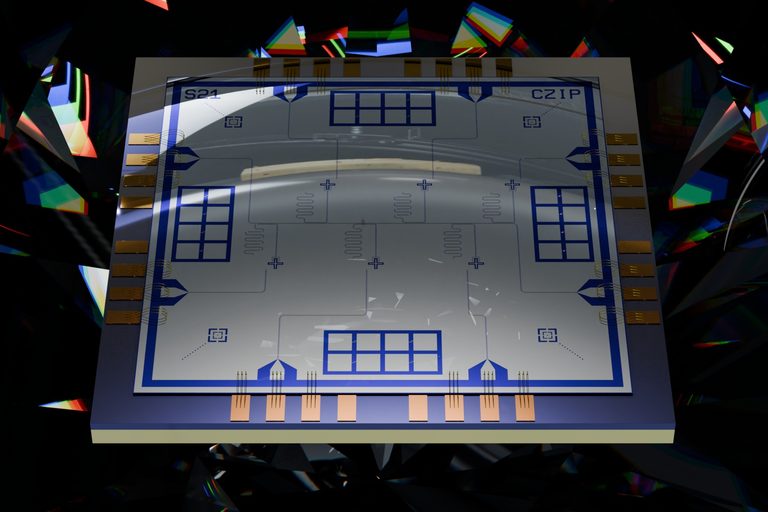
Project funded by Carlsberg Foundation (Research Infrastructure), grant CF21-0635. Participating organisations named by the source: KU University of Copenhagen. Runs n/a to 2025-12-31. Source: OpenAIRE Graph, from the funder's project data (collected by OpenAIRE on 2025-08-01); national funding data, not CORDIS. Abstract given by the source: At the Niels Bohr Institute, a dozen faculty work at today's frontiers of quantum physics, and transform their insights into quantum technologies which stand to revolutionize how we gather, process and communicate information. These advances are based on devices that store and process quantum information. Crafting such devices is a delicate art, and requires structuring materials at the nanometer level. In this project, we will commission a reactive ion etching tool, which can transfer nanoscale patterns from a lithographic mask to key materials such as silicon and silicon nitride. The resulting boost in fabrication capabilities will allow advancing numerous research avenues in fields as diverse as quantum optomechanics, atomic physics and superconducting qubits. What? Why? How?
Source: OpenAIRE Graph: projects of national funders, OpenAIRE, from the project data of Carlsberg Foundation. Retrieved 2026-11-02. Licence: Creative Commons Attribution 4.0 (OpenAIRE Graph). Selected metadata, adapted presentation; the publisher's record is authoritative. No endorsement by the source is implied. Licence: Creative Commons Attribution 4.0 (CC BY 4.0).
AI-assisted summary: The project "Reactive Ion Etching of Nanodevices for Quantum Optics and Electronics" is funded by the Carlsberg Foundation and involves KU University of Copenhagen. It aims to enhance fabrication capabilities for quantum technologies through a reactive ion etching tool. Suggested technology pillar: enabling. Generated by AI from the public source text; it may contain errors and the original source is authoritative.
Source: explore.openaire.eu · checked 2 Nov 2026 · AI-assisted summary