The four pillars in pictures
Quantum computing and simulation
Qubit processors and quantum simulators, error correction, algorithms and software.
Quantum communication
Quantum key distribution and networks that link quantum devices securely.
Quantum sensing and metrology
Clocks, magnetometers and gravimeters that measure with exceptional precision.
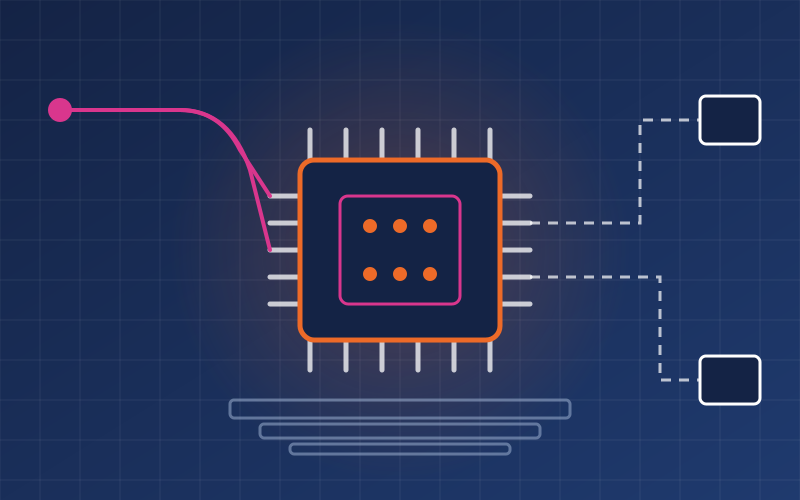
Enabling technologies and supply chain
Quantum chips and their fabrication, cryogenics, photonics and control electronics.
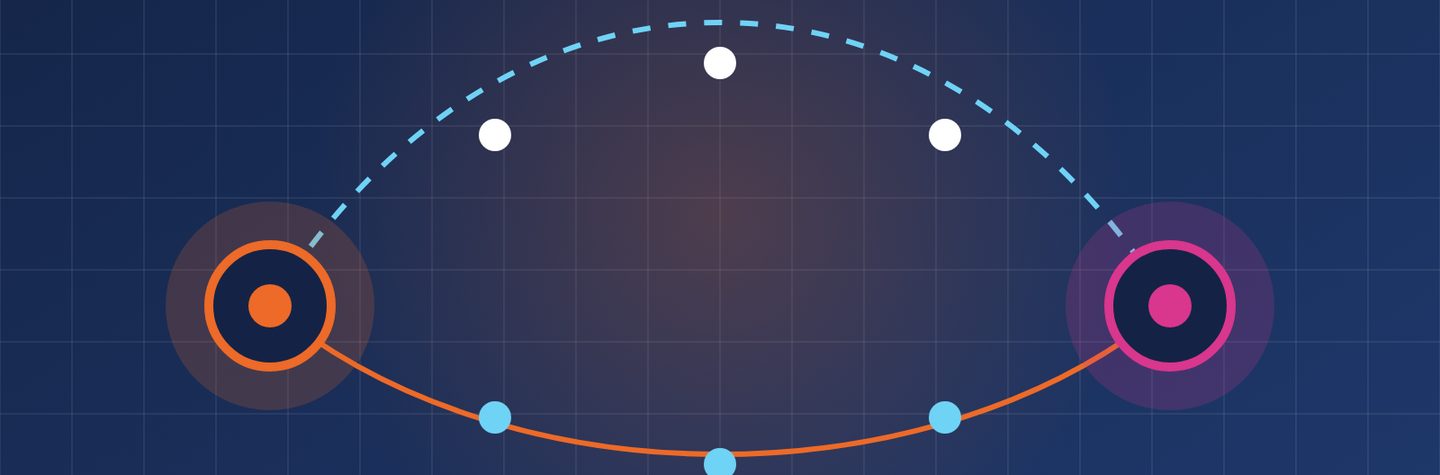
Bit and qubit. A classical bit is either 0 or 1. A qubit can be in a superposition of both, shown here as an arrow that keeps turning on a sphere until it is measured.
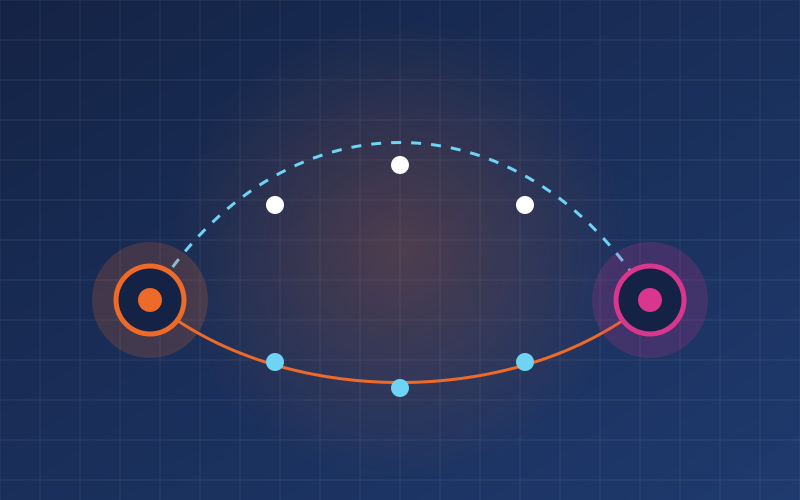
Quantum key distribution. Single photons carry the bits of a secret key. Anyone listening in disturbs the photons, so Alice and Bob notice the errors and discard the key.
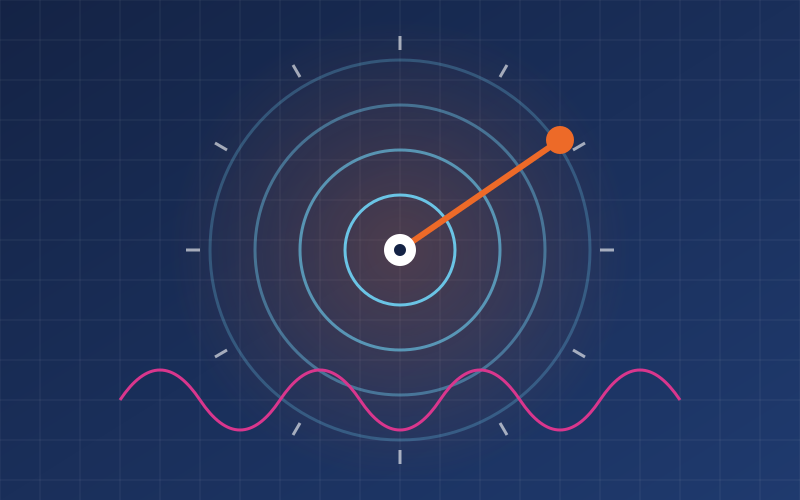
Quantum sensing. An atom that travels two paths at once is sensitive to tiny forces, and atomic clocks tick with extreme regularity. Both give very precise measurements.
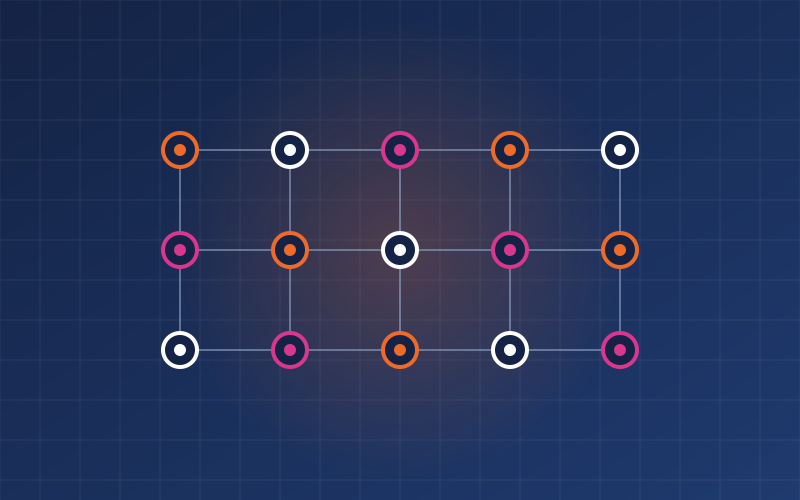
Quantum simulation. A lattice of cold atoms can be tuned to behave like a material or molecule that is too complex to calculate, so researchers can study it directly.
Quantum Europe groups quantum technologies into four pillars, following the draft Strategic Research and Industry Agenda (SRIA) 2026 of the Quantum Flagship: three pillars of applications, and a fourth for the enabling technologies and supply chain they are built from. The SRIA 2026 is still a draft; the portal will follow its final version. See how the portal places items in the pillars.
Quantum computing and simulation
Processors that compute with qubits, on every hardware platform (superconducting circuits, trapped ions, neutral atoms, photons and spins), the error correction that protects them, and the algorithms and software that run on them. Quantum simulators, controllable quantum systems that imitate other quantum systems to study materials, chemistry or physics, belong to this pillar. Earlier versions of the portal showed simulation as a pillar of its own.
Explore quantum computing and simulation
Quantum communication
Sending information protected or carried by quantum states: quantum key distribution, quantum random number generators, the distribution of entanglement, and the networks, memories and satellites that support them, such as the European Quantum Communication Infrastructure (EuroQCI). Post-quantum cryptography, which protects ordinary networks with new mathematical methods, is a related area and not part of this pillar.
Quantum sensing and metrology
Instruments that measure time, magnetic and electric fields, gravity, rotation or images with a precision that relies on the quantum states of atoms, spins or light: atomic clocks, magnetometers, gravimeters and quantum imaging. Uses range from medical imaging and navigation without satellites to geophysics and precise timing.
Explore quantum sensing and metrology
Enabling technologies and supply chain
What the three application pillars are built from: quantum chips and their fabrication, including pilot lines; materials; cryogenics; photonics and lasers; control electronics; and the software stack. The pillar covers work done for quantum technologies. Work that names no quantum technology belongs to none of the pillars.
Explore enabling technologies and supply chain
How items are placed in a pillar
Published rules place a project, organisation or document in a pillar from the words in its title and summary, from patent classes (CPC) and from research topics (OpenAlex). A pillar proposed by a rule is shown as suggested by a keyword rule, pending review until an editor confirms it; AI is used only where a page says so. The rules, the comparison with the SRIA chapters and the downloads are on the classification method page, and every source is listed under data sources.
Example content prepared for the Quantum Europe prototype. It is subject to IE Communications review before any external use.